
Toronto Amusement Park Injury Lawyers
Toronto amusement park injury lawyers understand that being involved in an amusement park accident can be like riding an emotional, physical, and financial roller coaster. What started as a carefree day of fun has ended in tragedy. A safety belt malfunctioned on the Tilt-A-Whirl, delivering you a debilitating head injury. Or your child was paralyzed when the bar popped open on a Bumper Car.
Verkhovets Law, Toronto amusement park injury lawyers, know amusement park injuries can happen. Fortunately, horrific ride-related accidents and fatalities are rare, and most injuries are minor. But even a fall caused by cracked pavement beside the Ferris wheel could result in a claim if it causes injuries that you should be compensated for. Don’t let anyone take you for a ride over your damages. Call or email our Toronto amusement park injury lawyers.
Why work with our Toronto amusement park injury lawyers?
Verkhovets Law, Toronto amusement park injury lawyers, advise that there are various possible amusement park injury claims – so going it alone can feel like stumbling through a House of Mirrors. The owner, employees, and ride manufacturers can be held liable individually – or in combination – to compensate for damages you or your loved one has suffered from an accident they caused.
Even if the victim is partially to blame.
Wait, what? Can my child be held responsible for part of his accident? Yes. But not all is lost.
Our Toronto amusement park injury lawyers know how to argue that while your child may have contributed to their injury by standing on a ride, s/he’s possibly not 100 per cent at fault – the operator should have known s/he was too small to be on it. So, you’ll receive a percentage of the damages award rather than the full amount.
The Toronto amusement park injury lawyers at Verkhovets Law explain that amusement parks function under the Occupier’s Liability Act (OLA), meaning the owner has a duty to ensure everyone on the premises is reasonably safe. So, if there’s a proven connection between their negligence and the injury, or death, then an argument for your damages is made.
Toronto amusement park injury lawyers note that Ontario amusement parks also operate under the Technical Standards & Safety Act, 2000 (TSSA) created to enhance public safety. The Technical Standards & Safety Authority (TSSA) is the regulator that inspects rides and makes sure they’re safely run by trained staff. Operators must ensure patrons can move safely on and off rides, or they’re held liable.
In Bhatt v William Beasley Enterprises Limited, 2015, the court awarded $256,692 to a boy and his father – who also sued under the Family Law Act – after the child was injured boarding a ride. The amusement park argued the victims were negligent due to a pre-existing health issue. The court disagreed, noting the ride didn’t normally stop for boarding, and the victims wouldn’t have known that, so they couldn’t assume the risk.
$256,692
awarded in Bhatt v William Beasley Enterprises Limited (2015) to a boy and his father after the child was injured boarding a ride — the park argued a pre-existing condition; the court disagreed, since the ride didn’t normally stop for boarding and the victims had no way to know that.
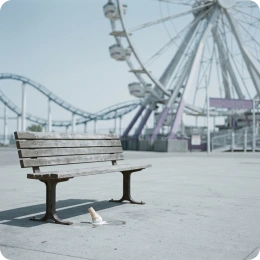
Toronto amusement park injury lawyers explain common injuries
While it might feel like riding a roller coaster is your last day on earth, the odds of dying are one in 750 million. Indeed, fatalities do happen – so it rarely becomes a news story. But, while deaths are few, there are a range of amusement park injuries. The Toronto amusement park injury lawyers at Verkhovets Law understand the consequences of an amusement park accident can adversely affect the rest of a victim’s life.
It’s not all about the rides – even concession stand food poisoning can lead to short-term lost income or become long-term, because you can develop chronic arthritis, nerve damage, or kidney failure from it.
Back in 2013, at the Canadian National Exhibition (CNE) fairgrounds in Toronto, 79 people became very ill with food poisoning caused by staphylococcus aureus, a known toxin. The culprit was the “Maple Bacon Jam” that topped the Cronut Burger—a hamburger patty between two crueller donuts. The jam should have been refrigerated and wasn’t, according to CTV News.
Our Toronto amusement park injury lawyers cite accident stats found in an Ontario 2020 TSSA report:
2020 TSSA REPORT

There were 1,377 incidents and near-miss occurrences: 6,457 from 2011-2020

In 2020 they reported 1,232 non-permanent injuries; 5,860 over 2011-2020

Twenty-six permanent personal injuries were reported in 2020; 221 in the prior 10 years

No fatalities were reported in 2020; one occurred between 2011-2020

The TSSA reported the risk of injury or fatality has increased slightly since the prior year [2019]

In their 2016 report the TSSA, found 96 per cent of accidents were caused by rider behaviour
The Toronto amusement park injury lawyers at Verkhovets Law note the most frequent amusement park ride accident injuries are:
MOST FREQUENT INJURIES

Amputation

Back injuries/Spine


Broken bones

Skull fracture

Drowning
Food poisoning
Heart attack

Burns

Compound Fracture

Concussion

Cuts, scrapes, lacerations

Stroke

Toronto amusement park injury lawyers outline what the legal terms mean
– Verkhovets Law, Toronto amusement park injury lawyers, explain if the defective design of a ride is why you became injured, you may sue the manufacturer claiming – based on a balance of probabilities – they must compensate your damages. This part of personal injury law is designed to protect consumers’ rights by holding manufacturers and retailers liable for the safety of their products – in this case, the rides.
Our Toronto amusement park injury lawyers say the proposition behind this area of law is basic: everyone must have a reasonable expectation they won’t be injured on someone’s property. So, the park owner/operator can be legally held accountable if they breached their reasonable duty of care to protect guests.
Toronto amusement park injury lawyers know a liability waiver is meant to protect a park against lawsuits – but it must have strict standards to be effective. A waiver is binding except if the signature is forged; fraud is used to get it; or when the operator ought to have known the person had no intention of being bound by it.
In Zaky v. 2285771 the court denied a motion for summary judgment dismissing an action against a trampoline park for a man’s broken neck. The victim alleged he was pressured to sign a waiver. The court said there is a “genuine issue” requiring a court trial as to whether the park took reasonable steps to bring the terms of the waiver to his attention.
Our Toronto amusement park injury lawyers explain reasons for injuries
The Toronto amusement park injury lawyers at Verkhovets Law say most amusement park accidents don’t ever have to happen. A lap bar comes apart. A seatbelt is put on improperly. A guest tries to hop on a ride before it stops.
A slip-and-fall happens in a puddle next to a splash pad. Fortunately, most injuries aren’t serious, but the Canada Safety Council says minor injuries are underreported and should be better tracked.
Verkhovets Law, Toronto amusement park injury lawyers, reveal the most common reasons for park injuries:
A ride doesn’t have restraints that work properly: poor fit or malfunctioning
Operator/human error
Poor rider conduct
Slippery, wet ground
Structural failure of a ride
Nature of the ride itself (rapid spinning can cause injury without any negligence)
Person was too small (or big) for the ride
Trip hazard
Unsafe ride entrances and exits
Toronto amusement park lawyers at Verkhovets Law list the following as negligence that can cause accidents:
Failure to train those who run the rides, and keep up with safety and operation updates
Failure to correct known problems with a ride
Not keeping the rides in safe order; not cleaning or inspecting them
Mechanical failure
Our Toronto amusement park injury lawyers handle these types of personal injury claims:
Additional negligence factors:
Not posting signs that inform of the risks and not making it clear to guests they are assuming the responsibility if they get hurt on a ride
Operating a ride incorrectly and not giving proper direction to guests
Warnings not posted about the risks involved for those with pre-existing health concerns, including back injuries, blood pressure issues and heart ailments
And our Toronto amusement park injury lawyers will help you with these types of personal injuries:
Broken bones ·
Concussions ·
Internal injuries ·
Soft tissue injuries ·
Whiplash
Verkhovets Law, Toronto amusement park injury lawyers, know that being injured isn’t fun Contact us and we’ll get right to work ensuring you are compensated for your pain
Toronto amusement park injury lawyers explain how to get damages
The Toronto amusement park injury lawyers at Verkhovets Law know that serious injuries are worth a lot of money for victims. There’s loss of income from a lengthy recovery and treatment, or long-term disability for debilitating injuries. Damages are awarded for medical or psychological expenses, general pain and suffering and other out-of-pocket expenses, such as lost income, assistance with housekeeping, and more.
If a family member dies of an amusement park injury, you may file a wrongful death claim that allows them to recover damages.
If you or a loved one has been injured our Toronto amusement park injury lawyers have a checklist of what to do to assist your claim’s success assembled by you or someone you trust:
The Checklist:
Contact our Toronto amusement park injury lawyers now
Our Toronto amusement park injury lawyers know there are many people who enjoy amusement rides and especially roller coasters. Roller coasters were invented more than 100 years ago. Things have come a long way since then, but the assumption of safety is still the same. It’s the amusement park’s responsibility to ensure you are not injured, and they should be held accountable if they don’t do that properly.
What our clients say
Swipe, use the previous and next buttons, or the left and right arrow keys to browse the reviews.
-

I cannot recommend Kim Mohammed-Sieudhan enough! From start to finish, she was absolutely incredible in handling my case. She was professional, responsive, and truly went above and beyond to ensure I received the best possible outcome given my circumstances. What stood out the most was how dedicated and supportive she was throughout the entire process. She took the time to explain everything clearly, kept me updated, and made what could have been a very stressful situation feel manageable and smooth. Kim didn’t just settle my case she fought to maximize my outcome, even securing additional funds for me that I wasn’t expecting. That level of care and commitment is rare, and I am so grateful to have had her on my side. If you’re looking for someone who is knowledgeable, compassionate, and genuinely has your best interests at heart, I highly recommend asking for Kim Mohammed-Sieudhan. You will be in excellent hands! Thank you again, Kim, for everything you’ve done for me!
 Malyka Wellington — review on Google (opens in a new tab)
-
I had a great experience with Verkhovets Law. The team was professional, knowledgeable, and very supportive throughout the entire process. They explained everything clearly and kept me informed at every step of my case. I really appreciated their responsiveness and dedication to getting the best possible outcome. I would highly recommend Verkhovets Law to anyone looking for a reliable personal injury lawyer
 Man Zayaa — review on Google (opens in a new tab)
-
We would like to sincerely thank our lawyer, Kim Mohammed-Sieudhan, for handling our case with great care and professionalism over the past year. She has always been kind, patient, and supportive, explaining every step clearly. In the end, we achieved a wonderful result. We truly appreciate all your hard work and highly recommend you to everyone.
 Ayten Hesenli — review on Google (opens in a new tab)
-
I had an amazing experience with Verkhovets law firm. John Johnson is a thorough professional, knowledgeable and well experienced lawyer. He handled my case very efficiently. With John's support, guidance and expertise i was able to find a reasonable resolution.
 ARSHAD RIAZ — review on Google (opens in a new tab)
-
Kim Mohammed & Cindy did an excellent job on my case. I am happy with my settlement! Thankyou :)
 Meghan Visco — review on Google (opens in a new tab)
-
Excellent service
 Tracee5 — review on Google (opens in a new tab)
-
11/10 service! Very satisfied. Kim Mohammed is a very competent lawyer! Would recommend anyone and everyone to her!!!!
 jay garvy — review on Google (opens in a new tab)
-
Kim Mohammed-Sieu is very good patient i at her job i would recommend Verkovets law firm
 Garner Albert — review on Google (opens in a new tab)
-
Great service
 Rinchen Tamang — review on Google (opens in a new tab)
Free consultation
Tell us what happened.
One hour, one lawyer, zero obligation. Or call/text us
any time — we answer 24/7.